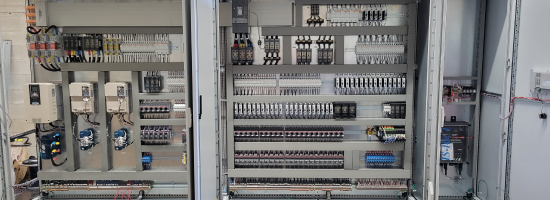
Industrial operations increasingly depend on accurate motor control to manage energy use, protect equipment, and maintain consistent output. As production demands fluctuate, fixed-speed motor systems struggle to deliver the flexibility required for modern facilities. This has made the variable frequency drive a foundational component across manufacturing, HVAC, and material handling environments.
By adjusting motor speed to match real-time load requirements, VFDs reduce unnecessary power consumption and mechanical stress. Facilities gain improved process control, smoother starts and stops, and greater operational stability.
For organizations seeking engineered support and system-level expertise, OnDrive Inc. provides tailored drive solutions designed for industrial environments. Understanding how advanced VFD technologies manage power more intelligently helps teams design systems that perform reliably under changing conditions.
How VFD Controllers Shape Motor Performance
At the core of every drive system is the VFD controller, which regulates voltage, frequency, and torque delivered to the motor. By controlling these parameters, the drive ensures motors operate within optimal ranges regardless of load variation.
Precise speed control allows motors to ramp up smoothly, reducing inrush current and mechanical shock. This directly extends the lifespan of bearings, couplings, and driven equipment. In applications such as conveyors, pumps, and fans, controlled acceleration improves process consistency while reducing wear.
Modern controllers also support advanced feedback mechanisms. Integration with sensors and automation platforms enables real-time adjustments based on pressure, flow, or temperature. This responsiveness improves energy efficiency and reduces unnecessary motor operation during low-demand periods.
By maintaining stable motor performance, controllers help prevent overheating, nuisance trips, and voltage fluctuations that can disrupt production.
When VFD Phase Converters Are Needed
Not all industrial facilities have access to ideal power configurations. Some environments rely on single-phase power sources while operating three-phase motor systems. In these cases, additional system components become necessary.
Phase conversion solutions allow VFDs to operate effectively even when incoming power does not match motor requirements. These configurations are common in remote facilities, retrofitted plants, and specialized applications where utility upgrades are impractical.
By converting available power into a usable form, VFD-based systems maintain speed control, torque stability, and motor protection. This flexibility enables facilities to deploy advanced motor control without extensive electrical infrastructure changes.
Understanding when phase conversion is required helps engineers design systems that remain stable and compliant under varying electrical conditions.
Benefits of Complete VFD System Solutions
Using fully integrated VFD solutions offers advantages beyond the performance of individual components. System-level design ensures compatibility between drives, motors, protection devices, and control interfaces.
Complete solutions reduce installation errors and simplify commissioning. When components are selected and configured as part of a unified system, engineers avoid mismatches that can lead to inefficiencies or faults.
Maintenance also becomes more predictable. Standardized configurations make diagnostics easier and reduce downtime during service events. Documentation, parameter backups, and consistent wiring practices support long-term reliability.
From an energy perspective, integrated systems allow drives to operate closer to optimal efficiency curves. This results in measurable reductions in power consumption and improved load management across multiple motors.
Conclusion
As industrial operations demand greater flexibility and efficiency, advanced drive technology plays an increasingly important role in power management. By delivering precise speed control, protecting equipment, and adapting to varying power conditions, modern VFD systems support stable and efficient operations.
Choosing the right drive configuration ensures motors operate reliably under real-world conditions. Whether managing complex automation or adapting to limited power availability, incorporating a properly specified VFD phase converter allows facilities to maintain control, efficiency, and long-term system stability. Contact us today!