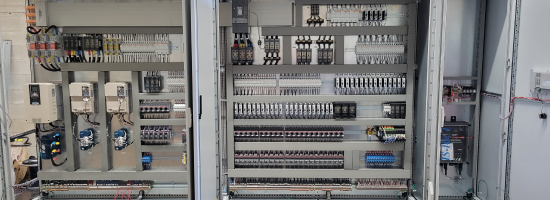
Variable-frequency drives are widely used to control motor speed, torque, and energy consumption in industrial environments. While many drives appear similar on the surface, their performance and control capabilities can vary significantly. Differences in control algorithms, hardware design, and integration features all influence how effectively a drive performs in real-world applications.
Selecting the right variable frequency drive goes beyond basic power ratings. The quality of the control system, responsiveness to load changes, and compatibility with automation platforms directly affect operational reliability. Understanding how VFDs differ helps teams align drive capabilities with operational goals.
Core Functions of a Variable Frequency Drive
At its core, a variable frequency drive controls motor speed by adjusting the frequency and voltage supplied to the motor. This allows motors to operate at speeds matched to process demand rather than running continuously at full output.
Key functions include controlled acceleration and deceleration, which reduce inrush current and mechanical stress. Drives also provide protection features such as overload monitoring, fault detection, and thermal management to safeguard both motors and connected equipment.
In addition, modern VFDs support feedback mechanisms that enable stable operation under varying load conditions. These functions form the foundation of motor control, but performance depends on how effectively they are implemented within the drive.
Differences in VFD Controller Capabilities
The VFD controller is the primary differentiator between basic and advanced drives. Entry-level controllers typically provide simple speed control suitable for variable-torque applications like fans and pumps. While effective for straightforward tasks, they may struggle with dynamic loads or precision requirements.
More advanced controllers offer vector control or closed-loop capabilities, allowing precise regulation of torque and speed. These drives respond more quickly to load changes and maintain stable performance in applications such as conveyors, mixers, and material-handling systems.
Controller capabilities also affect communication and integration. Drives with advanced controllers support multiple industrial communication protocols, enabling seamless interaction with PLCs, HMIs, and supervisory systems. This improves visibility, diagnostics, and process coordination.
Parameter flexibility is another important factor. Advanced controllers enable finer tuning, helping optimize performance for specific applications while reducing energy waste and mechanical wear.
Comparing VFD Solutions by Application Needs
HVAC (Fans & Pumps)
- Focus: energy savings + smooth speed control
- Look for: PID control, sleep mode, BACnet/Modbus
Conveyors & Material Handling
- Focus: controlled starts/stops + torque stability
- Look for: accel/decel ramps, braking, strong low-speed torque
Heavy Industrial Loads (Hoists, Crushers, Compressors)
- Focus: high torque + safety performance
- Look for: vector control, overload rating, torque limiting
Variable Torque vs Constant Torque
- Variable torque: fans, centrifugal pumps (efficiency-focused)
- Constant torque: conveyors, mixers (torque + overload-focused)
Harsh Environments
- Focus: durability in dust/moisture/heat
- Look for: IP/NEMA-rated enclosures, coated boards, surge protection
Selecting the Right Drive for Operational Goals
Not all VFDs deliver the same level of performance or control. Differences in controller capability, responsiveness, and integration support directly impact how well a drive meets operational needs. Selecting the right drive requires understanding both the application and the drive’s technical capabilities.
When matched correctly, a variable frequency drive improves efficiency, stability, and equipment lifespan. By evaluating VFD solutions based on performance and control requirements rather than specifications alone, industrial operations can achieve reliable motor control aligned with long-term operational goals. For facilities seeking engineered support and application-focused solutions, OnDrive Inc. provides tailored drive services designed to meet industrial performance requirements. For more information, contact us today!